How to Start Seeds Indoors Without a Grow Light
A practical guide to raising sturdy seedlings on an ordinary windowsill: the right window, clean trays, daily rotation, honest timing, and a patient week of hardening off.
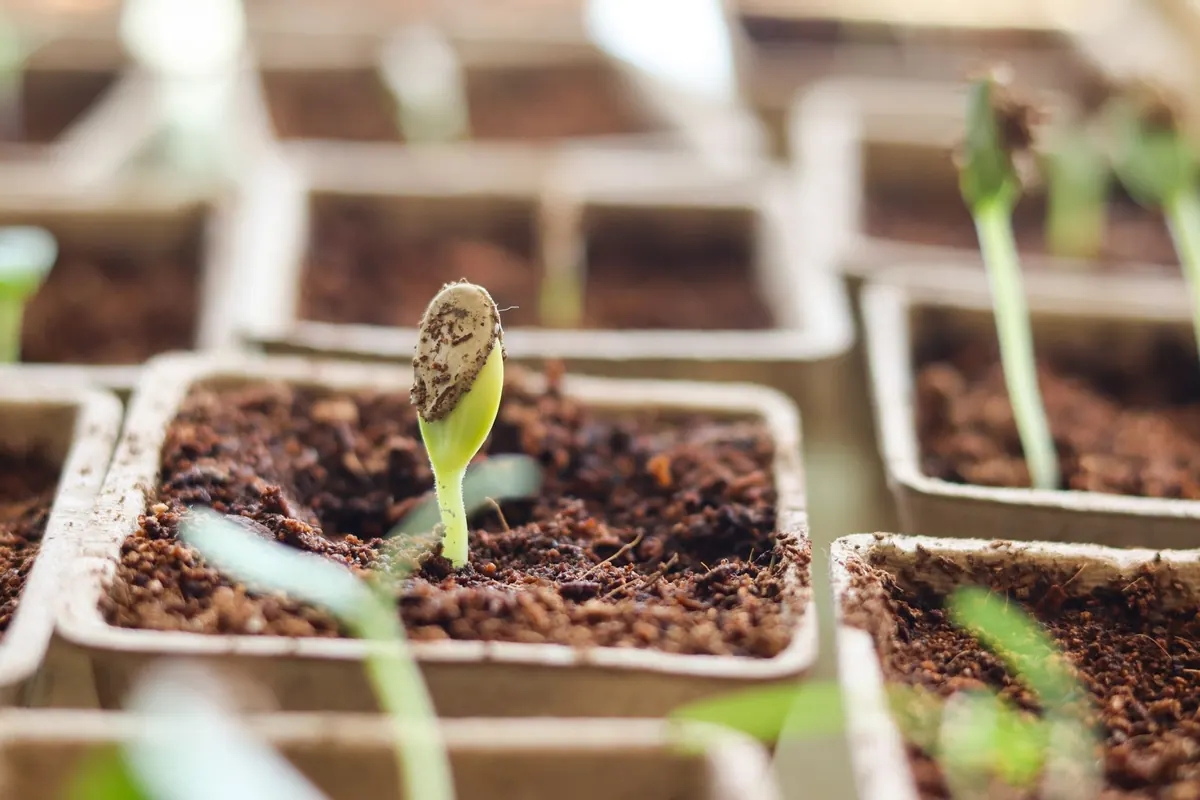
An ordinary south-facing windowsill will not do what a grow light does. It won't push a tomato from seed to transplant in six weeks in February, and it won't keep a tray of peppers compact through a grey January. What it will do, with a little planning and a daily habit or two, is raise sturdy lettuce, kale, brassicas, basil and a solid round of hardy annuals for planting out in spring. The trick is to work with the light you actually have rather than pretend it is stronger than it is.
What a Windowsill Can and Cannot Do
Light falls off quickly with distance. A seedling six inches from the glass receives noticeably more than one at the back of the same sill, and it will bend and stretch to tell you so. Modern double glazing also cuts a surprising amount of light, and in late winter the sun is still low and weak. Add a few hours of direct sun to a long stretch of bright indirect light and you have a decent nursery — but not a greenhouse.
Be honest about what belongs there. Lettuce, chard, kale, cabbage and other brassicas, leeks and onions, parsley and basil all manage well. So do cosmos, marigolds, calendula, stocks and sweet peas. Tomatoes and peppers are possible but will rarely be as stocky as ones started under lights or bought from a nursery; if you grow them, sow them a couple of weeks later than the seed packet suggests and plan to pot them on promptly. Anything that germinates in weeks rather than days is on your side.
Set Up the Sill Before You Sow
Preparation takes twenty minutes and saves you a fortnight of fiddling later. Clean every tray and cell in hot soapy water, or rinse with a dilute bleach solution and let it dry, because old compost residue is where damping-off and fungus gnats begin. Choose cells at least two inches deep so roots have somewhere to go, and use a seed-starting mix rather than garden soil — it holds moisture evenly and stays light enough for fine roots.
- Reflect the light. Tape a sheet of foil-covered cardboard, or a plain white board, behind the trays. It bounces light back onto the far side of the seedlings and noticeably reduces leaning.
- Catch the water. A boot tray or deep saucer under everything keeps the sill dry and lets you water from below.
- Moisten the mix first. Fill a bucket, add water, and stir until a handful holds together but doesn't drip. Fill the cells with that, not with dry mix you then flood.
- Find warmth for germination only. A warm spot near a radiator or above a fridge suits the first few days. The moment green appears, move trays to the coolest bright sill you have.
Sowing: Depth, Dampness, and the First Ten Days
Sow at roughly two to three times the seed's diameter. Tiny seeds such as lettuce and basil should sit on the surface and be pressed in, not buried, because many of them need light to germinate. Larger seeds like beans, squash and sweet peas go deeper. Cover the tray with a clear lid or a sheet of plastic to hold humidity, and take it off the day the first seedlings appear — leaving it on is how you get weak, soft stems and mould on the surface.
Label everything with variety and date. It sounds fussy until you have three nearly identical trays of brassicas and cannot remember which is the purple sprouting. Water from below by pouring into the saucer and letting the mix draw it up; the surface stays drier, which keeps algae and gnats down. Most seeds germinate happily between about 18°C and 24°C, with lettuce preferring the cooler end of that.
Rotation: The Ten-Second Habit That Prevents Leggy Seedlings
Seedlings grow toward the light, and a windowsill offers light from one direction only. Give each tray a quarter turn every day, or every other day if you are busy. Turn the tray rather than each pot, and stick a small piece of tape on one corner so you can see at a glance whether it has been done. Move trays right up against the glass — an inch from the pane is far better than six.
Once true leaves appear, brush the seedlings gently with your open hand or a piece of card for a minute a day. It mimics wind, and the stems thicken in response. A small fan on its lowest setting, pointed slightly away, does the same job and helps prevent damping off. Rotate the back rows to the front weekly so nothing spends a fortnight in the shade. If a seedling stretches anyway, bury the stem deeper when you pot it on; tomatoes will root along it.
Timing: Count Backwards From Your Last Frost
Find your last expected frost date from a local gardener, a nearby allotment group or a regional growing guide rather than a national chart for a city two hours away. Then count backwards. Starting too early is the most common windowsill mistake, and it produces tall, pale seedlings that sulk for a month after planting out.
- 10–12 weeks before: onions, leeks, and the slowest hardy flowers.
- 8–10 weeks before: peppers and aubergines, if you have the brightest sill in the house.
- 6–8 weeks before: tomatoes, basil, marigolds, cosmos, sweet peas.
- 4–6 weeks before: cabbage, kale, broccoli, lettuce, chard.
- 3–4 weeks before: squash, cucumber, courgette — they grow fast and resent root disturbance.
Sow lettuce in small batches every two or three weeks rather than all at once, and you will have a steady supply instead of forty heads maturing in the same week.
Watering, Airflow, and Sturdy Stems
Water from below, and let the surface dry slightly between waterings. Constant damp is the enemy: it invites fungus gnats, algae and rotting stems at soil level. Feel the mix with a finger rather than following a schedule, and remember that a cool windowsill dries out far more slowly than a warm room.
Ventilation matters as much as light. Crack a window on mild days for twenty minutes, keeping trays out of the direct draught, and run that small fan for an hour or two daily. Thin seedlings by snipping the weakest at soil level with scissors — pulling disturbs the roots of the one you want to keep. When roots show at the drainage holes, or the leaves of neighbouring plants touch, pot on into a slightly larger container. After three or four weeks in the same mix, feed with a half-strength liquid fertiliser once a week.
The Week Before Planting Out
Seedlings raised indoors have never met wind, cold or direct sun, and they will scorch or collapse if moved out in one go. Start hardening them off ten days before planting: two hours outside in shade on the first day, then gradually longer, moving into morning sun and finally into full sun, bringing them in at night. Water well the day before planting, and put them in the ground on a cloudy afternoon or in the evening.
Keep a notebook with sowing dates and what actually thrived on which sill. After one season you will know exactly how early your own windows can carry you, and the whole process becomes a rhythm rather than a gamble.
Photo: Krea / Pexels