
Soil Moisture Checklist: 7 Signs You're Watering Too Much
A practical seven-point checklist, using fingers and eyes, to spot overwatered soil before roots rot and leaves yellow—plus what to do when you count three signs or more.

Overwatering almost never looks like a flood. It looks like a plant that has been slightly off for a fortnight: a lower leaf turning yellow, a small droop at midday, a soil surface that never quite dries. Because the soil still feels cool and dark, the watering can comes out again, and the problem quietly deepens. Roots need air as much as they need water, and saturated soil pushes that air out.
What follows is a checklist you can run in a couple of minutes, with your fingers and your eyes, before you water anything. No single sign is proof on its own. Two or three together, though, are a clear signal to put the can down and let the root zone breathe.
Sign 1: The Soil Is Still Damp When You Check Again
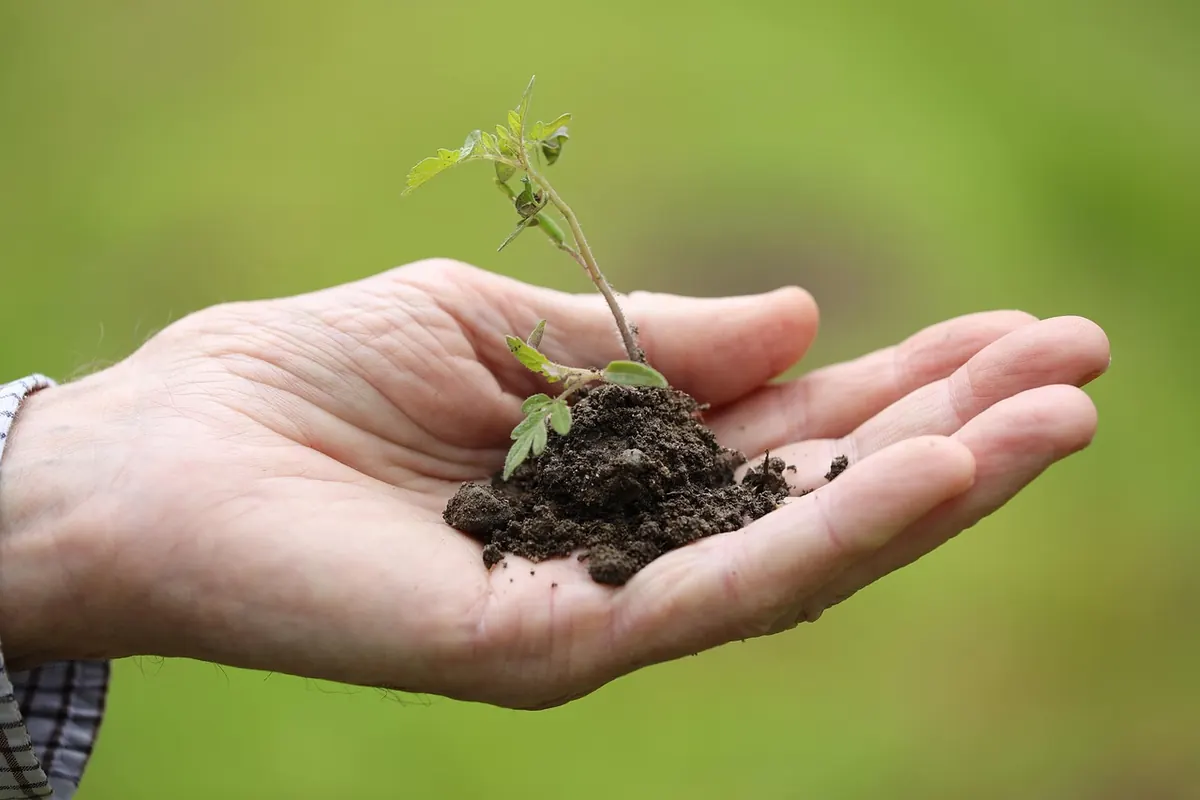
Start here, because this is the measurement everything else hangs on. Push a finger into the soil to the second knuckle for pots, or a hand's depth for beds. If it comes out cool and coated with dark crumbs, there is still water down there. A wooden skewer or chopstick left in the pot for ten minutes does the same job in a large container: if it comes out dark and damp, wait another day.
Two habits make this test more honest. First, check at the same time each day, not right after watering. Second, lift the pot. A freshly watered 20 cm pot is noticeably heavier than a dry one, and once you know both weights your hands become more reliable than your memory. Watch out for the "false dry" surface: small pots in sun often have a bone-dry top centimetre sitting over a soggy base, especially with peat-heavy mixes that shrink away from the sides.
A simple routine for most houseplants and container vegetables:
- Water slowly until a little runs out of the drainage hole, then stop.
- Wait until the top 3–5 cm of soil is dry before watering again.
- Empty the saucer fifteen minutes after watering; standing water wicks straight back up.
- Feel the weight of the pot before and after, so you learn what "needs water" feels like.
Signs 2 and 3: The Surface Looks Wrong, and Water Sits Instead of Soaking In
A healthy soil surface dries to a mid-brown and stays slightly crumbly. A surface that stays uniformly dark for a week is telling you something. So is a green film of algae on the soil or around the inside rim of terracotta, a soft grey-white fuzz of mould, or moss creeping across a bed that should be draining freely.
Then watch what happens when you actually water. Does it pool on top for several minutes before reluctantly sinking in? Does it slide down the inside of the pot between soil and wall, then straight out the bottom without wetting the root ball? Both point to soil that is either compacted or already full. A shrunken, spent mix can also turn water-repellent at the surface, which looks like overwatering from above and drought from below. The finger test to depth, not the surface glance, sorts this out.
Sign 4: Yellow Leaves, Starting From the Bottom
Overwatering yellows tend to appear low on the plant first, because that is where a stressed plant pulls resources from. The colour is usually pale and washed out rather than bright, and the leaf goes soft and limp before it drops. Compare that with the crisp, brown-edged, curling leaves that come from drought. A plant losing one old leaf a month is normal housekeeping; a plant losing two or three a week from the base, while the soil stays damp, is not.
Before you add fertiliser, rule out water. Feeding a waterlogged plant is like serving a heavy meal to someone who cannot breathe properly — the salts sit in wet soil and do more harm than good.
Sign 5: Drooping Leaves on Wet Soil
This is the sign that fools the most people, and it is worth understanding properly. When roots are starved of oxygen for long enough, they stop moving water. The plant wilts even though it is standing in moisture — so the instinctive response, watering again, makes it worse.
Use your hands to tell the two apart. A drought-drooping leaf feels dry, thin and papery, and it usually lifts within a few hours of a good soak. A leaf drooping from waterlogged roots feels soft, heavy and slightly cool, sometimes almost mushy at the stem, and it stays down after watering. If the soil is wet and the leaves are limp, do not water. Wait.
Sign 6: Brown, Soft Roots and a Sour Smell
When the first five signs are familiar, it is worth looking below the surface. Let the pot dry down for a day or two, then slide the plant out and look at the root ball. Healthy roots are pale, firm and plentiful, with soil that smells of earth after rain. Roots that have been drowning are brown or black, break apart easily, and the whole root ball may smell sour, like a drain or a forgotten cloth.
If that is what you find, act rather than hope. Trim the soft, dark roots back to firm tissue with clean scissors, shake out the spent mix, and repot into fresh, free-draining soil in a container that actually has a hole. Then water once, lightly, and leave it alone while it recovers.
Sign 7: Gnats, Mould, and Swollen Leaves
Fungus gnats hovering around a houseplant are not a coincidence — they breed in consistently damp soil, and their presence in numbers usually means the top layer has not dried out in weeks. The same goes for white mould on the surface, or a musty smell when you lean close.
One more sign, easily missed: small corky blisters or bumps on the undersides of leaves. This is the plant taking up water faster than it can lose it, and it usually appears when watering is heavy and irregular. Add slow new growth, a few dropped leaves, and split fruit on outdoor tomatoes, and you have a pattern rather than an accident.
What to Do When You Count Three or More
Do not panic and do not repot immediately unless the roots are clearly rotten. Work in steps over a week or so:
- Stop watering. Mark the date; the next watering happens when the soil is dry to the recommended depth, not on the calendar.
- Take the pot out of the saucer and move it somewhere with moving air and decent light, away from a cold windowsill at night.
- Aerate the surface by pushing a chopstick down to the base of the pot in several spots, then leaving the holes open to let air in.
- Check that the drainage hole works and that no plastic bag, blocked saucer or sealed cover is trapping water under the soil.
- Skip the gravel layer. It does not improve drainage in a pot; it just lifts the saturated zone closer to the roots.
- Water less often, but thoroughly when you do — a light daily sprinkle keeps the top wet and the base stale.
Then watch for the recovery signs: new growth at the tips, leaves that hold their shape through the afternoon, and a soil surface that dries in a reasonable two or three days. The most useful habit in all of this is also the least exciting one — check the soil with your finger before you check the calendar. Plants rarely need watering on a schedule; they need it when the soil says so.
Photo: Tumisu / Pixabay